.png)
Social Projects
Native Fruit Project

School Nursery Project
Youth + Paraibuna Program
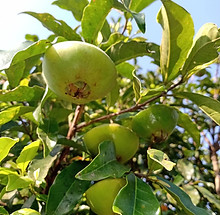
Native Fruits Project
The Native Fruits Project, developed by the H&H Fauser Institute in Paraibuna, is part of a strategy of the São Paulo City Green Belt Biosphere Reserve (RBCV), in which the municipality of Paraibuna is located, to reduce the anthropogenic impact on conservation units (core areas – such as the Serra do Mar State Park) existing in its territory, through the dissemination of the cultivation and consumption of native fruit trees. With the cambuci (Campomanesia phaea) as its flagship species (symbolic species), the actions of this strategy began in 2008 with the Cambuci Workshop, which gave rise to the Cambuci Gastronomic Route – Tourism, Environment and Culture, an annual event whose first edition took place in 2009. The Native Fruits Project seeks to organize a Local Productive Arrangement (LPA) around the production chain of native fruit trees of the Atlantic Forest. Its objectives include organizing production and marketing in the Alto Paraíba region (Paraíba do Sul Valley), creating an information network, developing research, providing technical assistance to producers, and certifying organic and origin production. Phase 1: Disseminating the Values of Native Fruits Started in 2008 with the Cambuci Workshop, it aims to bring to the attention of opinion leaders and the general public the flavors, nutritional values, and environmental relevance of native fruits. The Seminar on Cambuci, in its second edition, and the Cambuci Gastronomic Route – Tourism, Environment and Culture, in its fourth edition, are actions to disseminate the values of native fruits. The H&H Fauser Institute participated in the organization of both editions of the Seminar on Cambuci and was part of the governance of the Gastronomic Route until the beginning of 2012. Phase 2: Census The objective is to survey and register producers of Cambuci and other native fruit trees in approximately 80% to 90% of the municipality's territory. Through the Census, the aim is to find out how many native fruit producers there are, who they are, what they produce, and how much they produce. Started in January 2012 with the support of Suzano Papel e Celulose, the Census has already surveyed 347 properties and 7,153 native fruit trees, which include cambuci, uvaia, araçá, guava, jaboticaba, grumixama, passion fruit, cambucá, cambuí, and pitanga. Phase 3: Training Aims to train producers in tree management, harvesting, processing, and fruit storage. Phase 4: Storage Units Aims to implement decentralized fruit handling and storage units to serve the different producing regions of Paraibuna and neighboring municipalities. Phase 5: Association, Certification, and Marketing Aims to work on organizing producers from different regions of Paraibuna, focusing on association; the adoption of organic and origin production certification; and the structuring of marketing. ______________________________ PROJECT COORDINATOR Susi Fauser paraibuna.tur@hotmail.com TOTAL PROJECT VALUE R$ 435,672.00 AMOUNT FUNDED R$ 25,000.00
 |
|---|
Support:
School Nursery Project
The Viveiro-Escola project is an initiative of the H&H Fauser Institute, in partnership with the Paraibuna Municipal Department of Education, whose primary objective is to develop environmental education activities with third-, fourth-, and fifth-grade students at EMEF Irmã Irene Alves Lopes (Irmã Zoé), using a nursery for seedlings of fruit tree species native to the Atlantic Forest as a cross-cutting theme in classroom work and a methodology for socio-educational practice. The project has the following specific objectives: • Raise children’s awareness of respect for and care of fauna and flora through direct contact with nature, serving as a stimulus for an awareness of the interdependence between humans and the environment; • Integrate classroom subject content with the environmental socio-educational practices of the Nursery-School; • To develop a Political-Pedagogical Proposal (PPP) for the Raiz do Aprender Nursery-School project; • To encourage participation in the production and planting of native species seedlings in riparian areas in the municipality of Paraibuna, promoting environmental awareness and children’s active involvement; • To promote changes in attitudes and paradigms toward sustainable development; • Provide a supportive environment for strengthening identity, improving self-esteem, fostering mutual respect, and promoting community harmony to build a culture of peace. The project directly benefits 500 children aged 8 to 11, in the 3rd, 4th, and 5th grades of elementary school at EMEF Irma Irene Alves Lopes, and, on average, 20 elementary school teachers are indirect beneficiaries. BRIEF HISTORY The Viveiro-Escola project originated in 2009 from a research project developed as part of the PJ-MAIS Paraibuna Junior Scientific Initiation workshop, titled “The Potential of a Viveiro-Escola as a Tool for Promoting Environmental Education and the Reforestation of Riparian Areas,” by Pedro Paulo Gonçalves Barbosa and Diana D’Arc dos Santos (both 18 years old at the time of the project), under the guidance of biologist Milena Antunes de Camargo Mendes (Advisor) and scientific researcher Elaine Rodrigues (Co-advisor). The objective of the research project was to analyze the feasibility of establishing a school nursery with native Atlantic Forest tree species at EMEF Irmã Irene Alves Lopes – Irmã Zoé for the development of environmental education activities and the reforestation of riparian forests. To assess this feasibility, an opinion survey was conducted among teachers and students in the 1st and 4th grades (currently 2nd and 5th grades) of elementary school, using two distinct opinion-gathering instruments. For the students, the sample size was 10% (totaling 86 participants). Fifteen teachers were also interviewed using 10 open-ended and closed-ended questions. The project directly benefits 500 children aged 8 to 11, in the 3rd, 4th, and 5th grades of elementary school at EMEF Irma Irene Alves Lopes, and, on average, 20 elementary school teachers are indirect beneficiaries. BRIEF HISTORY The Viveiro-Escola project originated in 2009 from a research project developed as part of the PJ-MAIS Paraibuna Junior Scientific Initiation workshop, titled “The Potential of a Viveiro-Escola as a Tool for Promoting Environmental Education and the Reforestation of Riparian Areas,” by Pedro Paulo Gonçalves Barbosa and Diana D’Arc dos Santos (both 18 years old at the time of the project), under the guidance of biologist Milena Antunes de Camargo Mendes (Advisor) and scientific researcher Elaine Rodrigues (Co-advisor). The objective of the research project was to analyze the feasibility of establishing a school nursery with native Atlantic Forest tree species at EMEF Irmã Irene Alves Lopes – Irmã Zoé for the development of environmental education activities and the reforestation of riparian forests. To assess this feasibility, an opinion survey was conducted among teachers and students in the 1st and 4th grades (currently 2nd and 5th grades) of elementary school, using two distinct opinion-gathering instruments. For the students, the sample size was 10% (totaling 86 participants). Fifteen teachers were also interviewed using 10 open-ended and closed-ended questions. Of the students interviewed, 56% said they had never visited a school nursery; 52% had never planted a tree (of those who had planted a tree, only 7% did so as part of a school activity); 100% of the teachers who responded are interested in visiting a nursery and believe it is important to teach about native plants. Topics such as botany (2%), ecosystem function (2%), plants and animals (2%), and conservation (5%) were addressed in the classroom by only a small percentage of teachers. Most teachers and students expressed interest in and support for establishing a school nursery at the school studied. In July 2009, the project participated in the 9th Open Congress for Biology Students (CAEB-UNICAMP) and won 1st Place, competing against 43 other projects from federal and state universities. See the full research project). Through a partnership between the H&H Fauser Institute and the Paraibuna Municipal Board of Education, and with sponsorship from the company Bananinha Paraibuna Ltda. (secured by Pedro Barbosa himself) and with the donation of native fruit tree seedlings by the Paraibuna Hydroelectric Plant/CESP, the “Raiz do Aprender School Nursery” was inaugurated on August 14, 2009, at EMEF Irmã Irene Alves Lopes – Irmã Zoe. Under the technical guidance of biologist Larissa Neli Faria, from the H&H Fauser Institute, and through the volunteer work of its creators, the project served an average of 444 children per month. In 2010, the research project—which included a report on the intervention at EMEF—was selected as a finalist in the Humanities category for the Brazilian Science and Engineering Fair (FEBRACE) at the University of São Paulo (USP). View the full research project. In 2011, the H&H Fauser Institute, in partnership with the Paraibuna Municipal Board of Education, submitted a funding proposal to the Municipal Fund for Children and Adolescents (FUNCAD) for the continuation of the “Viveiro-Escola Raiz do Aprender” project at EMEF Irmã Zoé, which was approved to take effect as of ?? 2012. The funding led to the hiring, by the Municipal Department of Education, of young Pedro Barbosa to coordinate the project, and four other young participants from PJ-MAIS Paraibuna to serve as monitors. Currently, Pedro Barbosa is studying Environmental Engineering at the University of Vale Paraíba, and the project is coordinated by Lidiane Assis Santos, a student of education who also graduated from PJ-MAIS Paraibuna, under the supervision of biologist Larissa Neli Faria from the H&H Fauser Institute. The Nursery-School Project is an affirmative initiative to integrate young people into the eco-labor market, resulting from the research and social intervention work of PJ-MAIS Paraibuna. _________________________ PROJECT COORDINATOR Lidiane Assis Santos lidianeldi@hotmail.com TOTAL PROJECT BUDGET R$ 28,000.00
|
|---|
Support:
YOUTH PROGRAM - Environment and social integration
The Youth Program – Environment and Social Integration (PJ-MAIS) is a program aimed at promoting social inclusion through eco-professional education and the comprehensive training of young people aged 15 to 21. It combines environmental conservation with social inclusion in areas under heavy human pressure, such as watershed regions and buffer zones of conservation areas. It began in 1996 with a pilot project in the municipality of São Roque, São Paulo, and is currently active in 15 of the 78 municipalities that make up the São Paulo Green Belt Biosphere Reserve (RBCV). PJ-MAIS is a program of the RBCV, with executive coordination provided by the São Paulo State Forestry Institute, an agency under the State Secretariat of the Environment. The PJ-MAIS educational training process encourages youth leadership and the awakening of all latent potential in young people, creating opportunities for productive and reflective experiences with goods and services, thereby developing their capacity for initiative. The training consists of four semester-long modules: the first module focuses on awakening vocations, interests, and aspirations; the second module focuses on equipping participants for action; the third module focuses on contextualizing inclusive and co-responsible actions; and the fourth module focuses on developing eco-professional competencies. The first two modules comprise the Basic Cycle, and the last two the Specialization Cycle.To participate in the training program, young people must be currently enrolled in (or have completed) high school at a public educational institution. In 2006, the H&H Fauser Institute (IHHF) partnered with RBCV to establish a PJ -MAIS in Paraibuna, a municipality in the São Paulo portion of the Paraíba Valley that is home to an important water source and part of the Serra do Mar State Park, and where 18.36% (3,123 residents) of the population is between the ages of 15 and 24, of whom 30% are currently enrolled in high school. The municipality of Paraibuna has characteristics that make it a destination for migrants: it is close to industrialized municipalities well-equipped with research institutions and technical and university education facilities (primarily São José dos Campos, Jacareí, and Taubaté) and, therefore, major hubs attracting labor; it has a limited supply of professional training opportunities and a limited supply of job opportunities. Compounding this situation, young people in Paraibuna have little knowledge of local realities and values, which leads to low self-esteem, and upon turning 18 (in some cases, upon turning 16), regardless of their family’s socioeconomic status, they must become economically active, unless they enroll in university or recognized vocational education. Although the demand for high school education is met by the three existing public schools and the National Rural Learning Service (SENAR) network offers, on an irregular basis, training courses for rural activities, accredited vocational education and university education are available only outside the municipality. After graduating from a technical or university program, young people face significant difficulties finding employment within the municipality. Given this reality, in August 2007, the first class of the PJ-MAIS program in Paraibuna began, from which 22 young people graduated from the Basic Cycle and 10 from the Specialization Cycle, in 2008 and 2009, respectively. In August 2009, the second class began, in which 11 young people graduated from the Basic Cycle and 5 from the Specialization Cycle. In August 2011, the H&H Fauser Institute and Petrobras signed an agreement with the aim of increasing the number of young people served; reducing program dropout rates; and expanding the labor market through the introduction of the School-Enterprise methodology. The PJ-MAIS Paraibuna The PJ-MAIS Paraibuna is located at two sites: the former rural school at Fazenda São Pedro, at km 10.5 of the Paraibuna–Santa Branca Road, in the Boa Vista neighborhood, in the rural area of Paraibuna, and in the Espírito Santo neighborhood.The selection process for young people participating in the PJ-MAIS program in Paraibuna begins with a presentation of the program at public high schools and the distribution of registration forms. Registered young people are invited to participate in the selection process, which lasts three days. During these three days, the program and the thematic workshops are presented in greater detail, and the young people are asked to confirm their interest in participating in the program. If the number of young people exceeds the number of available spots, priority criteria established by the PJ-MAIS coordination team are applied: focus on young people aged 15 to 21 from socially and economically disadvantaged communities (25% do not need to meet these criteria), who are currently attending or have attended high school at a public educational institution, and those with the lowest family income. The decision is made jointly with the entire group of applicants, and from that point on, the program seeks to foster the young people’s sense of responsibility toward one another and toward PJ-MAIS, as their inclusion in the Program meant that someone else could not participate. The first two modules comprise the Basic Cycle, and the last two the Specialization Cycle. In the Basic Cycle of the PJ-MAIS in Paraibuna, the young people receive theoretical and practical training in four thematic workshops: Sustainable Agricultural and Forestry Production and Management (PROMAFS), Artisanal Agroindustry, Consumption, Waste, and Art, and Sustainable Tourism, in addition to Comprehensive Training. In the second cycle, or Specialization Cycle, students choose the thematic workshop(s) in which they wish to specialize. Based on this choice, they must develop their personal project for entering the job market and actively participating in their community. These projects are developed within the framework of a fifth workshop called Junior Scientific Initiation. A prerequisite for enrolling in the Specialization Cycle is having completed the Basic Cycle. During the implementation of the first cohort of the PJ-MAIS program in Paraibuna, it was observed that students perceived the program’s duration as being too long. Thus, with the aim of encouraging young people to remain in the program, the PJ-MAIS program in Paraibuna began the practice of awarding a certificate to students who complete the Basic Cycle and another certificate to those who complete the Specialization Cycle. This practice, not yet widespread in the PJ-MAIS network, has shown some positive results: some young people who completed only the Basic Cycle reported that the PJ-MAIS Basic Cycle completion certificate was decisive in securing their current job. The project provides for the provision of lunch and a mid-morning snack for the students. It was observed, during the monitoring of the first two PJ-MAIS classes in Paraibuna, that eating together constitutes an important moment for socialization and strengthening the group. The training program for young people consists of four sessions per week, each lasting four hours, for a total of: – 2 basic modules: 360 hours; – 2 specialization modules: 360 hours; Starting with the second module, the young people participate in the selection process for future participants and begin mentoring new trainees. Starting with the third module, they begin developing intervention projects in their communities and their professional development projects. Starting with the Specialization Cycle, the youth begin entrepreneurship training through the “School-Enterprise” methodology, developed by the Holistic Association for Ecological Community Participation (AHPCE). The PJ-MAIS Pedagogical Team in Paraibuna is generally coordinated by a professional with a university degree and training in the Program’s methodology. Each thematic workshop is also coordinated by a professional with a university degree and training in the Program’s methodology. In addition to these professionals, local artisans and technicians with diverse backgrounds and solid experience in their fields are invited to lead workshops and give lectures, either on a volunteer basis or for compensation. The Results of PJ-MAIS in Paraibuna In July 2008, PJ-MAIS in Paraibuna graduated the 22 young people from the first class in the Basic Cycle, and in July 2009, 10 young people are participating in the Specialization Program, 5 of whom have completed the Junior Scientific Research Workshop. Recognition of this work in the municipality has already led to professional placement for 4 of these young people and the employment of 3 others as environmental and cultural monitors, as well as generating several invitations for PJ-MAIS youth to participate in courses, technical visits, and various local forums. From the second cohort, 11 young people graduated from the Basic Cycle, and 5 are currently taking the final module of the Specialization Cycle. As a result of the Junior Scientific Initiation Workshop, developed within the scope of the PJ-MAIS program in Paraibuna, four research projects by the youth were submitted to the Brazilian Science and Engineering Fair (FEBRACE), of which two were selected to be presented at FEBRACE 2009. Lidiane Assis Santos (16 years old) received the award for third-best project in Brazil in the field of Agricultural Sciences, with her project “Producers of Campomanesia phaea in part of the Buffer Zone of Serra do Mar State Park, Municipality of Paraibuna – SP.” Clara Maria Rangel de Freitas Moreira (17 years old) received the award for the second-best project in Brazil in the field of Humanities, with her project “Historical and Cultural Heritage of the Remedinho dos Prazeres Neighborhood, Paraibuna, SP.” Both projects focused on the buffer zone of Serra do Mar State Park, and the authors intend to continue their work with the aim of generating income for local communities while preserving the environment and local culture. The study “Historical and Cultural Heritage of the Remedinho dos Prazeres Neighborhood, Paraibuna, SP” was one of the 10 finalists in the “Scientists of Tomorrow” project and was presented during the 61st Annual Meeting of the Brazilian Society for the Advancement of Science (SBPC) in Manaus, AM. And the project “Producers of Campomanesia phaea in part of the Buffer Zone of Serra do Mar State Park, Municipality of Paraibuna – SP” was invited to be presented at the 5th Northeastern Science and Technology Fair (FENECIT) and was selected to represent Brazil at the 1st Sweep (2010) in Houston, Texas. As a result of this latter project, Lidiane Assis Santos participated as a youth delegate, representing the cambuci community, at the Terra Madre Brasil 2010 event, organized by the Slow Food movement. The Junior Scientific Initiation Workshop also gave rise to the project “Potential of a Nursery-School as a Means of Promoting Environmental Education and Reforestation of Riparian Areas” by Pedro Paulo Gonçalves Barbosa (18 years old) and Diana D’Arc dos Santos. This project won first place at the 2009 Congress Open to Biology Students (CAEB) during Biology Study Week at the State University of Campinas (UNICAMP-SP),competing against 44 projects from federal and state universities in the field of Education and Extension. This project was implemented at a municipal school in Paraibuna, with funding from the company Bananinha Paraibuna, and was selected for the 2010 edition of FEBRACE. Pedro Paulo Gonçalves Barbosa was hired by the Municipal Secretariat of the Environment to advise on replicating the project in the municipality of Cajamar, SP. The project “Fish Production in the Paraibuna, Natividade da Serra, and Redenção da Serra Reservoirs, São Paulo, Brazil,” authored by PJ-MAIS student Levindo Cândido de Britto Neto and two other young women from Natividade da Serra, Marina dos Santos Rezende and Naiara de Faria Benedito, was also developed within the scope of the Junior Scientific Initiation Workshop. This work was selected for Febrace 2010 and was presented to the Ministry of Science and Technology—National Environment Week at the Forestry Institute, 2009. In addition, it was presented, with partial results, at the 9th Open Congress for Biology Students (IX CAEB) at Unicamp in 2009. For the 2011 edition of FEBRACE, three projects by young people who participated in the Junior Scientific Initiation Workshop were selected. This workshop included the participation of students from the first cohort of the PJ-MAIS program in Paraibuna. _________________________ PROJECT COORDINATOR Agricultural Engineer Dr. Carlos Alberto da Silva Fº casf1960@yahoo.com.br
Partners:
Agreement:
 |
|---|
 |
 |
|---|
 |
 |
 |
 |


